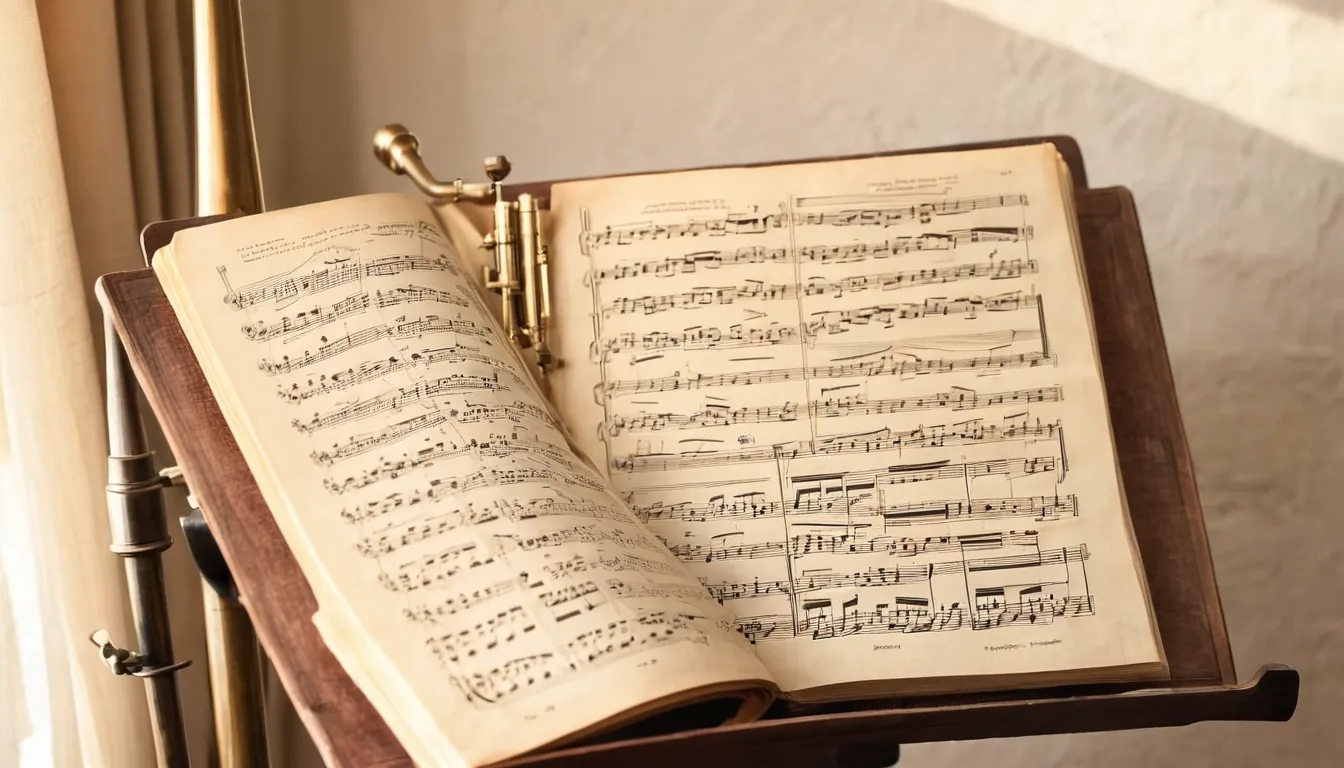
The staff
Music is written on a staff of five lines with four spaces between them. Each line and space stands for a note. Higher on the staff means higher in pitch. Notes above or below the staff sit on short extra lines called ledger lines.
Notes are named with the letters A to G. After G, the names start again at A, one octave higher.
Clefs
The clef at the start of each line tells you which notes the lines and spaces stand for.
| Clef | Lines, bottom to top | Spaces, bottom to top | Used by |
|---|---|---|---|
| Treble (G clef) | E G B D F | F A C E | Violin, flute, clarinet, saxophone, trumpet, guitar, piano right hand, higher voices |
| Bass (F clef) | G B D F A | A C E G | Cello, bass, trombone, piano left hand, lower voices |
| Alto (C clef) | F A C E G | G B D F | Viola |
The treble clef curls around the second line, which is G. The two dots of the bass clef sit either side of the fourth line, which is F. Short phrases such as "Every Good Boy Does Fine" for the treble lines can help at first, though the goal is to recognize notes on sight.
Sharps, flats and naturals
A sharp raises a note by a half step, the smallest step in Western music. A flat lowers it by a half step. A natural cancels a sharp or flat. Written beside a single note, these signs last until the end of the bar.
A group of sharps or flats placed right after the clef is the key signature. It applies to those notes all the way through the piece unless something cancels it. Check the key signature before you play, since forgetting it is one of the most common early mistakes.
Other ways music is written
- Tab is common for guitar, bass and ukulele. Each line is a string, with the lowest-sounding string at the bottom, and numbers show which fret to press. Tab is quick to learn, though it often leaves out rhythm.
- Chord charts show chord names above the lyrics, or small grid diagrams that show where to place each finger.
- Lead sheets give the melody on a staff with chord names above it. Jazz and pop players use them a lot.
- Drum notation uses a staff where each line or space stands for a drum or cymbal.
Which system to learn first depends on your instrument and your music. Guitarists playing songs with friends may start with chord charts and tab. Anyone planning to join a band, orchestra or choir will need standard notation.
How to learn to read
- Learn the notes your first pieces use, a few at a time.
- Say the note names aloud as you play slowly.
- Spend a few minutes each session reading something new and easy, a little below your playing level.
- Use flashcards or a note-reading app for short drills.
- Clap or tap the rhythm before playing the notes. The rhythm guide covers counting.
Can I play music without reading notation?
Yes. Many players learn by ear, from tab or from chord charts. Reading notation opens up more printed music and makes group playing easier, so it is worth learning if those matter to you.